The interview
We talk about why 40 people watching a long video can be worth more than 1,500 views on a short one, the TikTok video that got thousands of views and no orders, how much founders should spend on production and when, the three videos every founder should post, and the Kickstarter video that helped raise $40K in its first week.
Edited for length and clarity. Times play the video from that point.
Stop trying to look AI perfect
Usman When I work with CEOs or companies, founders, they're very particular and they want it to be perfect, AI perfect right now. And I say, hey, listen, this is not who you are. You are who you are because of your good and bad, right? So we need to take that together, and that's what makes us human and makes us unique.
You are who you are because of your good and bad.
Justin It makes people connect with us because you don't connect with a robot. You connect with real human experiences, right?
Usman Yeah, and this is what we did when we started working together with a lot of our political figure clients. We're like, yeah, show your human side. It's fine. You're a dad, you're someone who loves coffee. People build a rapport like that when they see that. Okay, this person is not just a job, or not just a title. He's a human just like us, and he feels things, right?
Why founders are scared of the camera
When you go on social media, especially with a lot of founders, they're scared of putting their face in front of the camera.
Justin I get why people have that insecurity, that fear of what happens if it's someone that doesn't take it the right way, or leaves a weird impression. But you have to step into the arena. It's kind of like the Brené Brown, if you ever follow her. Put yourself out there to allow people to actually engage with what you're doing and feel some type of connection with you.
Usman Once we start making videos with a lot of the founders or even politicians, in the start, of course, they're very hesitant. They're not 100%. But then when they see how people come to them and connect because they have seen those videos, now they think they know the person through this online media. So they feel more comfortable. There's more support.
Why long-form video is back
Instagram just introduced a long-form video. Before, it was all few seconds, short-form content, and the attention span is very low, so we have to be very quick. I feel like what AI did is, there's so much of that content out there that now we as human were like, okay, well, where's the value? And then the long-form content has gotten more attention, which is totally opposite to what we've been told from past, I would say, three to five years.
40 views on a podcast vs 1,500 on a short
Justin Social media over the years has trained us in a very specific way, where numbers, like the engagement, likes, the views, we want more and more and more. On LinkedIn, there's constantly people celebrating, oh, I got 10,000 more followers. Don't think that the numbers on different platforms are the same.
40 views with a podcast is completely different than 1,500 views of your 30-second video. 40 people sat there and gave 30 minutes of their time to watch your episode. That's something to celebrate, and to recognize that that's a different type of investment.
The TikTok video that got views but no orders
Usman I have a real example to back this up. There was this time where the client comes in, corporate client, again, B2B. Their TikTok video did really well because we showed the process of how these printing machine works and how they prepare the order and everything. And people are interested, okay, interesting, but they never got any order from it.
But they got a lot of views, a lot of comments, a lot of likes, right? And same thing, long format on their LinkedIn performed way different. Probably 50 people watched it, compared to like thousands that watched it on TikTok. But then they got some momentum going through that 40 people that watched that video.
Probably 50 people watched it, compared to like thousands that watched it on TikTok.
If production is easy, where should the effort go?
Justin You mentioned it earlier, the AI part, that's your field. I know you use it yourself. So if production is becoming so easy, what should people then spend their time doing for that video effort to become successful? Is it in the planning? Is it in the speech writing?
Usman 100% planning, I would say. Why? Because if we bring the value to someone, then other person can invest their time and give their time to your podcast or to your content, right? So planning 100%, and then the writing itself, because you got to do the research when you're planning. Ask the questions. What are the problems that people are having in this area as we speak?
So I would say 100%, learn more about the problems of your client, or what's happening to the audience you want to reach out to. The more you learn about their problems, the better your content is going to be.
The more you learn about their problems, the better your content is going to be.
Mad Men, ketchup and knowing your audience
Justin I feel like that's old school marketing, old school advertising. I don't know if you're a Mad Men person. I remember there's an episode where he talks about ketchup. It's not that that graphic or that idea was hard to execute. There was like five words on the page. But you have to understand your audience so well, and know what triggers them, to be able to come up with that idea.
I think video is the same way. You have to understand the pains, the person consuming this video. What situation are they at? Are they at their desk? Are they sitting on the toilet? Are they in bed? Who are they? What are they looking for? You have to know them so well that what you actually produce is relevant for them.
How much should founders spend on production?
Justin You produce incredibly high quality videos, but you've also done the run and gun. For the founder who's doing video content, how much money, time, effort should they put in elevating the production?
Usman In terms of the production that you can do from the webcam or the phone, I would say every guy needs a mix of that. What we did with a lot of those founders or CEO is, okay, they have an event coming up and they're going on the stage. That means we're doing a professional-level production, 'cause then we can capture a camera where you can see the audience, where we can see the person on the podium. And then we can create way more stories around it, right?
So that's where I would say invest in a professional team, get more professional cameras on board, if there's a photographer and a videographer following you for a day.
Match the production to the scenario
Justin Something that I learned in part through the work that we did together: match the production to the scenario. If you're showing a founder doing the day-to-day of running a business, be open to a handheld phone camera, because it matches the behind the scenes, the casual vibe. If they're giving a keynote, a bigger event, that's something where I would invest money. It sounds simple, but it's important to think about what are you trying to achieve? What does the situation actually call for?
Usman We were at Zion National Park and we did all the crazy stuff there. We went to Angels Landing. The next day we did the Narrows. And a lot of those, the camera, we cannot take to the location. So we end up using cell phone or even the Meta glasses. How can we still get the footage and then mix it in and tell the story?
So yeah, 100% I agree with you. It does depend on where, but certain scenarios where you do want to bring out the professional team to make sure that content can live on multiple spaces. Especially if you're a public speaker or a politician, your media goes out to news or all these other publications. So if it's polished, they can take it and then distribute it.
The three videos every founder should post
Justin What are some video ideas, formats that you see working, specifically in personal branding or in the B2B world?
Usman If you're starting out, A, if you can pin one video that tells in 20 second or 30 second who you are, what you do, what's your experience like, why you started, why you're passionate about it, and if I really like or resonate with you, how can I contact you? In that video, call to action. Say, hey, listen, add me on LinkedIn. This is my email, or this is my website.
That could be your one thing that anyone can go on your profile, does not know you, in 20 seconds they can learn about you.
And then the second video I would recommend is if you really wanna promote your services, then talk about the services, your USPs, what makes you different, basically.
And then third video that always works is showing behind the scenes, showing how you create stuff for other clients. Every time I post behind the scenes, I get so many calls, like, we wanna do this, how can we connect? So it could be a behind the scenes of a podcast or behind the scenes of a commercial.
Every time I post behind the scenes, I get so many calls.
Where video fits in go-to-market
Justin For the go-to-market person, you have limited budget. There's limited time more than anything. And you're thinking, I know I have to tell my story. Where does video come in the mix with go-to-market?
Usman I would say video is number one, 'cause people don't like reading anymore. They love video. Everyone likes to watch stuff. Even with a lot of the podcasts, I listen to it in my car, so we do things on the go. And a lot of the video stuff is, okay, I wanna learn more about the services or the person, or the founder himself.
People don't like reading anymore. They love video.
So video is 100% important. Now, what budget allows you to do is get your audit right. If you can hire someone in that realm, they can audit: okay, this is your audience. And then create those personas for them.
These are the people you should create content for. And then someone can also search what their problems are, and then based content off of that, and then bring your suggestion and personality in it.
Spend where the data says it works
Justin When it comes to budget, when I work with go-to-market, the budget and the resources you put into a specific channel should align with what the data says about the success of that. If you're still figuring out who your ICP is and you don't know yet who your customer is, maybe don't drop five to $10,000 on a video to your audience.
Figure out who that is first. And if you're still working on your offer, create videos, but I would opt to make it a bit more scrappy. Until you have some type of proof and confirmation, like, okay, this message is working. Now we can justify investing more in the production of that, because we got the results.
Usman A lot of startup founders don't think like that, but this video can close a hundred thousand, or a couple of tens of thousands, and bring in money for them, 'cause this video is helping them connect with their specific client. So they think, okay, well, what if we spend 5,000 and we don't get anyone?
The Kickstarter video that raised $40K in a week
This is one time we did a Kickstarter video, and again, the founders don't really have the budget. So we worked out the deal where we're like, okay, what if we partner up? If you get funded, then you pay this much, and if you don't get funded, we'll do it for very cheap. We'll do it for 25% of the cost.
And then that video, back in the day BuzzFeed was a thing, right? Their video got featured on BuzzFeed and some other blogs, and then they got funded 40 grand in one week. They were surprised to see the result. We were surprised also, 'cause the video worked.
They got funded 40 grand in one week.
Wrapping up
Justin It's worth it, big time. The ROI doesn't just stop. It's not like the video stops being out there and stops providing value. It lives on. So thanks, man, for joining. If anyone is listening to this and thinking they want to up their video production, can't recommend your work more highly.
Usman Thank you, that means a lot, Justin. You're too kind.
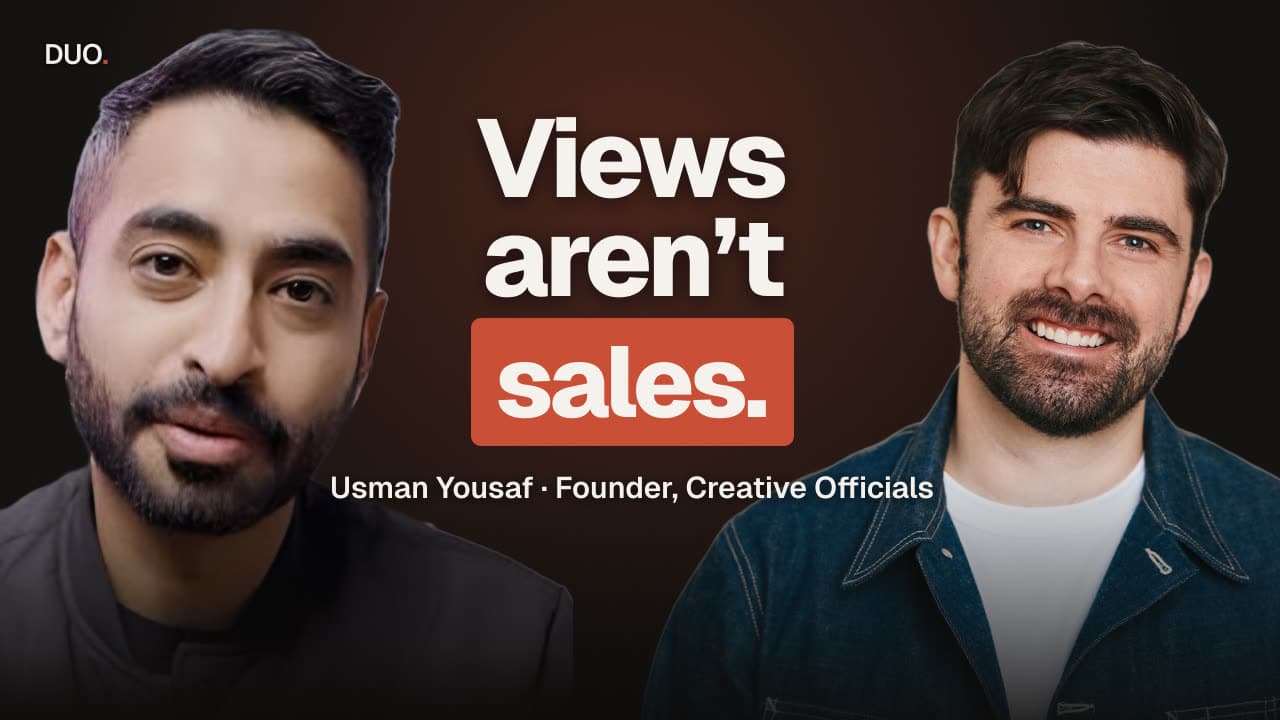
Usman Yousaf is the founder of Creative Officials.
Full transcript
Usman one LinkedIn post or one LinkedIn video you could make or break a deal.
Justin So this episode will be all about video. And I'm really excited to have Usman Yousaf, who is the CEO and founder of Creative Officials. He spent over 10 plus years in the realm of video production. And I actually got to know Usman a number of years ago when I worked in political comms. We did a number of videos together, we became friends. And he always brought such creativity, such great ideas and professionalism to every single video that I thought, hey, this is such a topic that I think is so relevant, so important to a lot of companies, founders who are in that realm of branding, storytelling, whether that be for ads, for organic content, for your pitch video, for your testimonials or intro, whatever that may be, explaining your services, right? There's a whole number of reasons why people go to video versus other formats to tell that story.
So I hope you enjoyed this conversation. I know I did.
Usman Thanks for the kind introduction, Justin. And likewise, it's been an awesome time working together. Thanks for doing this and I love the series so far. So talking about the video and the branding itself, when I work with CEOs or companies, founders, they're very particular and they want it to be like perfect, AI perfect right now. And I say, hey, listen, this is not who you are. You are who you are because of your good and bad, right? So we need to take that together and then that's that's what makes us human and makes us unique.
Justin It makes people connect with us because you don't connect with a robot. You connect with real human experiences, right?
Usman Yeah and this is what we did when we started working together is with a lot of our political figure clients that we're like yeah show your human side it's it's fine like you know you're a dad you're someone who loves coffee people You know people build a rapport like that when they see that okay. He's this person is not just a job Or not just a title. He's a human just like us and he feels things, right?
Because let's say when you go on social media, especially with a lot of founders there They're scared of you know putting their face in front of the camera
Justin I get why people have that insecurity that maybe fear of like what happens if it's if it's someone that doesn't take it the right way or like leaves a weird impression, but You have to step into this, into the arena. It's kind of like the Brené Brown, if you ever follow her. Put yourself out there to allow people to actually engage with what you're doing and feel some type of connection with you.
Usman Once we start making videos with a lot of the founders or even politicians. And in the start, of course, they're very hesitant. They're not 100%. But then when they see how people come to them and connect because they have seen those videos, now they think they know the person through this like you know online media so they feel more comfortable there's more support Instagram just introduced a long-form video before it was all like few seconds short-form content and the attention span is like very low so we have to be very quick I feel like what AI did is like there's so much of that content out there that now you know we We as human were like, "Okay, well, where's the value?" And then the long-form content has gotten more attention, which is totally opposite to what we've been told from past, I would say, three to five years.
Justin Social media over the years, I think, has trained us in a very specific way where numbers, like the engagement, likes, the views, this sort of thing, we want more and more and more. I mean, on LinkedIn, there's constantly people are celebrating, "Oh, I got 10,000 more followers, 20,000 more followers, don't think that the numbers on different platforms are the same.
40 views with a podcast is completely different than 1,500 views of your 30 second video. 40 people sat there and gave 30 minutes of their time to watch your episode. That's something to celebrate and to recognize that that's a different type of investment.
Usman And I have a real example to back this up what you just said is there was this time where the client comes in and their TikTok video, corporate client, again, B2B, their TikTok video did really well because we showed the process of how these printing machine works and how they prepare the order and everything. And people are interested, okay, interesting, but they never got any order from it.
But they got a lot of views, a lot of comments, a lot of likes, right? And same thing, long format on their LinkedIn performed way different, which is like what you said, probably 50 people watched it, compared to like thousands that watched it on TikTok. But then they got some momentum going on through that 40 people that watched that video.
So it's 100%, it's proven time and time.
Justin Okay, so Usman, there's so many things that I wanna ask you about. You mentioned it earlier, the AI part, that's your field. I know you use it yourself. So if production is becoming so easy, what should people then spend their time doing
for that video effort to become successful? Is it in the planning? Is it in the speech writing?
Usman 100% planning, I would say. Why? Because we, again, as I said, if we bring the value to someone, then other person can invest their time and give their time to your podcast or to your content, right? So planning 100% and then the writing itself because you got to do the research when you're planning, Like you got to do, okay, ask the questions.
What are the problems that people are having in this area as we speak? So, I would say 100% learn more about the problems of your client or what's happening to the audience you want to reach out to or to connect. The more you learn about their problems, the better your content is going to be.
Justin I feel like that's old school marketing. That's old school advertising where, I mean, I don't know if you're a Mad Men person. I remember there's an episode where he talks about ketchup. It's like, it's not that that graphic or that idea was hard to execute. There was like, I don't know, five words on the page, but you have to understand your audience so well and know what triggers them to be able to come up with that idea.
I think video is the same way. It's like, you have to understand the pains,
the person consuming this video, like what situation are they at? Are they at their desk? Are they sitting on the toilet? Are they in bed? Who are they? What are they looking for? What are their things that are gonna grab their attention? You have to know them so well that what you actually produce is relevant for them. And that's tricky.
And production value, okay? So you produce, and I've seen the work. We've done work together. You produce incredibly high quality videos. And, but you've also done the run and gun. You've also done like larger production. For the person, or let's say the founder who's doing video content.
How much money, time, effort should they put in elevating the production? They're starting off what makes sense and at what point should they invest more maybe in the tools or in using the services like that you provide.
Usman So in terms of the production that you can do from the webcam or the phone, I would say every guy needs a mix of that. Well, what we did with a lot of those founders or CEO is like, okay, while they have an event coming up and they're going on the stage, that means we're doing a professional level production 'cause then we can capture a camera where you can see the audience, where we can see the person on the podium, we can see the person on like big screen that's been there, and then we can create way more stories around it, right?
So that's where I would say, yeah, invest in a professional team, get more professional cameras on board if there's a photographer and a videographer following you for a day.
Justin Something that I learned and probably I learned in part through the work that we did together when it comes to video, photography, these kind of creative disciplines match the production to the scenario, right? If you're showing a founder doing the day-to-day of running a business, use a handheld, be open to like a handheld phone camera because it matches the kind of behind the scenes, the casual vibe.
If they're giving a keynote, which is quite a professional, like a bigger event, that's something where I would invest money so it matches the scenario. I think it sounds simple, but it's important to think about what are you trying to achieve? What does the situation actually call for?
Usman We were at Zion National Park and we did all the crazy stuff there. We went to Angels Landing. The next day we did the Narrows. And a lot of those time, the camera, we cannot take it to the location. So we end up using cell phone or even the Meta glasses. We're like, okay, well, how can we still get the footage and then mix it in and tell the story?
So we did that. So yeah, 100% I agree with you. It does depend on where, but yeah, certain scenarios where you do want to bring out the professional team to make sure that that content can live on multiple spaces. And especially if you're a public speaker or like a politician, your media goes out to news or all these other publications, right?
So if it's polished, they can take it and then distribute it.
Justin Speaking of, okay, what are some things, ideas, video ideas, formats that you see working, specifically in the realm of, let's say, personal branding or in the B2B world, let's say? Like, what kind of things do you see creatively?
Usman I would say if I can give an advice, okay, what type of content if you're starting out or what does work is, A, if you can pin one video, that tells in 20 second or 30 second who you are, what you do, what's your experience like, why you started, why you're passionate about it, and if I really like or resonate with you, how can I contact you?
So in that video, do call to action. Say, hey listen, add me on LinkedIn. This is my email, or this is my website. And that could be your one thing that anyone can go on your profile, does not know you, in 20 seconds they can learn about you or 30 seconds they'll learn about you. Okay, this is who you are, this is why you do because you're passionate about it.
This is, these are your, just like an overarching view of services, don't go in detail. And then the second video I would recommend is if you really wanna promote your services, then talk about the services. Telling more about your services or your USPs and, you know, what do your, what do your, what makes you different basically, right? So this could be your second video.
And then third video is that always works is showing behind the scenes, showing how you create stuff for other clients, right? 'Cause if you show what I felt like every time I post behind the scenes, I get so many calls like, you know, we wanna do this, how can we like connect? So it could be a behind the scenes of a podcast or behind the scenes of a commercial every shot.
Every time I post, I feel like somebody reached out, It's like, okay, let's connect.
Justin For the go-to-market person, right? You have limited budget. There's limited time more than anything. And you're thinking, I know I have to tell my story. Where does video come in the mix with go-to-market?
Usman So I would say video is number one, 'cause people don't like reading anymore. They love video. Everyone likes to watch stuff. I'm trying to say that now people are more lazier. They don't like reading, let's be honest. Even with a lot of the podcasts, I listen to it in my car, so we do things on the go. And a lot of the video stuff is, okay, I wanna learn or I wanna learn more about the services or the person, or the founder himself.
So video is 100% important. Now, what budget allows you to do is, at least get the, what we said is get your audit right. if you can hire someone in that realm, they can audit, okay, this is your audience and then create those personas for them. So let's say John Julia or whoever age this is your right audience.
And these are the people that you should reach out to. That means these are the people you should create content for. And then someone can also search what their problems are, what they're dealing, and then based content off of that, and then bring your suggestion and personality in it.
Justin When it comes to budget, when I work with go-to-market, it's the budget and the resources you put into a specific channel should align with what the data says about the success of that. Let me explain that a bit more. If you're still figuring out who your ICP is and you don't know yet who your customer is, maybe don't drop five to $10,000 on a video to your audience.
Figure out who that is first. And if you're still working on your offer, create videos, but I would opt to make it a bit more scrappy. And until you have some type of proof and confirmation, like, okay, this message is working, now we can justify investing more in the production of that because we got the results.
Usman So if we're talking about numbers of the production, I'll put it this way, people don't really think, or a lot of those even startup founders don't think like that, but this video can close what I mentioned, like, you know, a hundred thousand or a couple of tens of thousands and bring in money for them 'cause this video is helping them connect with their specific client.
So they think, okay, well, what if we spend 5,000 and we don't get anyone, right? So, or what if we're spending 10 or 15? So this is one time we did a Kickstarter video and again, the founders don't really have the budget. So what we worked out the deal where we're like, okay, well, We, what if we partner up and then if you get funded, then you pay this much and then if you don't get funded, you know, we'll do it for very cheap.
We'll do it for 25% of the cost. Like, you know, what we, exactly. So it will make your life easy. And then that video back in the day, BuzzFeed was like a thing, right? And their video got featured on BuzzFeed and some other blogs. And then they got funded 40 grand in one week. So they were surprised to see the result.
We were surprised also to see the result 'cause the video worked.
Justin It's worth it, big time. You know, the ROI is just-- Huge. And the video in the organic space, like the ROI doesn't just stop. It's not like the video stops being out there and stops providing value. It lives on. So thanks, man, for joining. It's such a pleasure. And for those, honestly, I don't normally do this end part, but I've worked with you.
And if anyone is listening to this and thinking they want to up their video production. If you're a big brand, I know you've worked with some pretty significant brands, also on the personal branding, like the run and gun politicians, founders, like can't recommend your work more highly.
Usman Thank you, that means a lot Justin. You're too kind, you're too kind, you're amazing yourself.