The interview
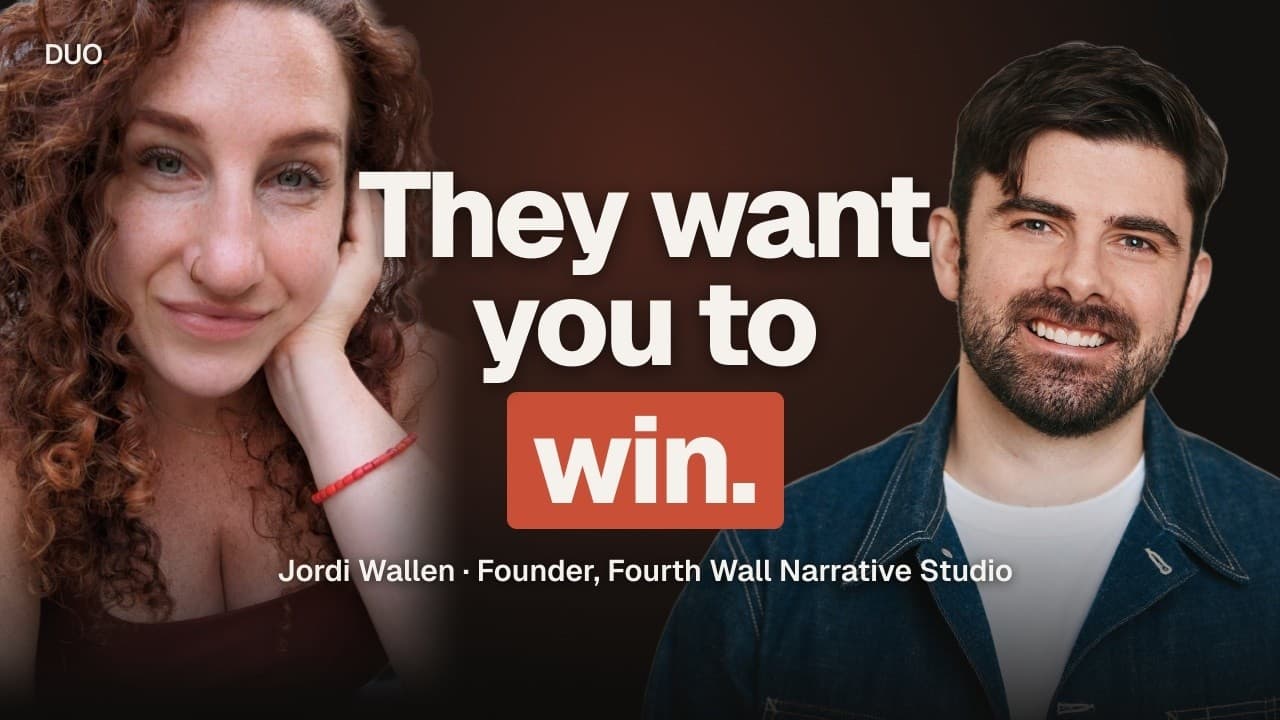
We talk about why the people judging you want you to win, the audition question that changed how she performs, what to do when you get the keynote slot after lunch, and the night she lost her voice and had one of her best shows.
Edited for length and clarity. Times play the video from that point.
From singer to actress to coach
Justin DeMarchi So you were a professional actress. What does that life look like? Did you grow up doing that? Were you nervous when you were on stage?
Jordi Wallen I did not grow up doing it. I had started singing from a very young age, so it was eight when I started singing, taking lessons, doing recitals, but theater did not come to me until late in my high school journey.
I went to acting school at NYU, I got a degree in musical theater. So when I went there and all these other kids had been acting their entire lives and knew it inside and out, I was like, I am outranked here. I have no idea what I'm doing. Which was humbling for sure. So I learned a lot about the craft, if you will.
And I will say, I don't get nervous for performances. I get nervous for the audition part, because it's like a job interview. If you had to interview for a job every three to six months to feed yourself, to live, there is a lot riding on that. And so those are the moments that really freak me out, when there's super high stakes.
And I use that feeling to translate into what I'm trying to help founders and executives do, because those high stakes moments, like giving a keynote, like doing a TEDx talk, pitching for your next series of money, those super high stakes moments are where staying cool, calm, and collected, and under control of your body and your voice, that is what I can relate to the most. So being able to get your narrative across in those moments where there's a lot riding on the line, stakes are high, your heart rate is really high, I think that's where I really thrive.
The room wants you to win
Justin When you had an audition, how would you prepare? What did you do to be calm, be collected, bring your best self forward?
Jordi Two really important pieces that I learned throughout college that helped with that. One is that the people behind the table judging you, or the VC sitting there that you're pitching to, they want you to be the answer. They want you to be the solution. They don't want to have to keep interviewing people. They don't want to have to keep auditioning people. It's not fun for them either. They are on your side, actually, rooting for you. They want this process to be done. They want to find the person. So everybody really is on your side and wants you to win. That's, I think, the biggest mindset that helped me.
Everybody really is on your side and wants you to win.
Who are you singing to?
And then the second thing that was really huge is when I was actually auditioning to get into college. I had to sing songs, I had to do monologues, and the person stopped me mid through my song, and I was like, oh, I'm done. This is it. I'm not going to college. And she's like, “Who are you singing to?” And I thought I was singing to my sister in the song, because that's, you know, the song was to the sister. And she's like, “No, no, no, no, not the character. Who are you, Jordi, singing to right now?” And I'm like, “Oh, is there a wrong answer? I don't know.”
So long story short, you pick someone who makes you wildly comfortable. For me, it was kind of a sad song. I had recently lost my dog. And the story was about a girl who had lost her sister, and she's singing to the memory of her sister. So I kind of projected my dog out there and sang this song to him, and it unlocked that whole emotional inner life, you know?
I get nervous when I know my parents or my friends are in the audience for something. So that wouldn't help me in a big moment. If I was the exec pitching, or if I was giving my keynote, I would be like, all right, my best friend who's brutally honest no matter what, or my partner, I'll put them out there, right? Because I'll be comfortable and I can say anything and nothing's a mistake. I just got to live in the moment. Those are the two really big mindset moments that really shifted how I moved through my acting career.
Warm up like an actor
Justin Let's say they're doing a TEDx, or let's say they are doing a keynote presentation, or just recording social media content. How could those types of things translate to them?
Jordi For starters, I think most people in those situations don't know how to warm up their voice and their body, their instrument, if you will. You know, you have thousands of eyes on you. Most people don't know what to do with their hands while they're speaking. So getting all that energy out, doing a proper, like, actors and vocal warmup first, to start and be comfortable in your body and not stiff or awkward. I think that's the first start when you're doing anything public facing.
In terms of the mindset shifts, same kind of thing. I think the lights are so bright in these situations that oftentimes you can't see who is in the audience, which works to your benefit. So you can imagine whoever makes you most comfortable, that you're talking to them, and you put them in the audience somewhere and talk to that. Super helpful, that I find, and a lot of people I've worked with have found.
Why the audience is on your side
I personally get, like, secondhand cringy, embarrassing feelings when I'm watching live theater, or I can't watch reality TV, because I get like, oh my God, I can't look.
My skin feels like it's peeling off my body. Maybe it's because of my experience doing live theater for so long that I know how embarrassing it can be, and how much it takes, and you're just putting your whole self out there.
I think a lot of people when they get on stage, people who are more normal than I am and haven't done this experience for a living, they are so hyper focused on themselves. You're like, how do I look right now? What am I doing with my hands? My shirt is stuck. But if you can just focus on winning the room, and remembering that those people sitting there, they don't wanna see you fail, right? It's embarrassing. Nobody wants to feel that secondhand embarrassment. They want you to shine. They are there to support you and send you their love, send you whatever vibey gifts they have in the audience. They want you to be the solution. They want you to be the answer. They want to end the search. Nobody wants to walk out of a theater or a keynote and be like, “Ugh, I feel so bad for that person.” Nobody wants that.
They don't wanna see you fail. They want you to shine.
The worst keynote slot
Justin In business, there's this element of competition. And your competitors might be in the room. And people might be disinterested because you're doing a keynote at the worst slot in the event. Sometimes we put more pressure on ourselves than I think the moment really deserves. I don't know if that resonates with you.
Jordi Thousand percent. I do that in my personal life all the time. I make such a big deal, I work it up in my head, right? And then I do it, I'm like, oh, I will do that 12 more times, 'cause it was great, it was fine.
If you have the keynote slot, the first one after lunch, and you know everyone's gonna be on their sugar crash and their carb coma, okay, so be fun, right? Be the person that grabs their attention. Because if you're worried that they're just gonna doze off, 'cause this time slot sucks, okay, grab their attention. Be even better than you expect it to be. Keep it high energy.
Justin Rather than be like, “Oh, this sucks,” okay, how can I tailor my presentation so that it takes into account when people are gonna be listening to me?
Jordi Let it happen to you. Let it happen for you. Make it work, you know? Don't be the victim of the circumstance. Use it for your favor.
Show me who you are behind the logo
Justin When you work with people, is it typically in this presentation situation, where someone is preparing for something like a keynote or TED Talk, where they're on stage, the eyeballs are on them?
Jordi It's not the typical one, but it is one of them. I'm working with a nonprofit founder right now because she has a big keynote coming up. She has done keynotes forever, right? But this is a brand new one. It's about a different topic. So it's not something that she's as comfortable with, so we have to figure out, OK, how do we get as comfortable as you are with this one you've been doing for three years now?
I will say more typical is kind of this format, where we have just a discussion where I want the person to reveal who they are behind the company. And why them? Why are they the solution? Why were they the right person to start this company and solve this problem? Show me who you are behind the logo, behind the polished website, right?
The best answer comes after the interview
Justin There's this constant battle, I find, whether it's conscious or not, where what should I say versus what really is a story that makes me excited, the passion. This happened today, literally. The person gave me the answers. And then as we were just kind of ending the conversation, like, hey, how did you find that? He started to give me his best answers in the whole conversation. I think that illustrates the difference between what should we say, what's the good business answer, and what actually is the truth, basically, behind it.
Jordi I think once somebody knows the camera is recording, they're like, I have to be performative. I need the polished answers. So when I send my initial overview questionnaire to people I'm working with, I think the very first thing on there is like, I don't want perfection. You're not going to like the outcome. It's not interesting. I don't enjoy perfection. I think that it's super overrated, and the world is so AI washed right now. Sometimes the hook, if you will, comes out once you stop recording, metaphorically and literally.
Perfection is overrated
Justin Think about theater. What is a perfect performance? Is it the one where technically you made no missteps, your feet were exactly where, you hit every note? Or is it the one that the audience is saying, I felt so much what you were saying, it really resonated? The idea of perfection, I think, is sometimes more of a defense than it is a help to us.
Jordi I think the goal should never be perfection. I think the goal should be you eliciting the feeling that you wanted, right? So like you said, yes, I can hit every mark on the stage. I can hit that high note. But honestly, sometimes the best performances are when you're sick, so you can't rely on your voice, right? Because you can't hit that high note. How do you emote to kind of fake it, or get the same result in a new way, since you're kind of missing one of your tools?
The night she lost her voice
There was a time I came down with the flu, and I was doing Little Shop of Horrors, and there's this massive note at the end, right before the main character's kiss, and I just didn't have it, and I just started sobbing. Just like, my gut reaction was like, I'm just going to cry right now. And it was so much better than if I'd actually sung the note, because the love interest was able to catch me and hold me, and you could hear the audience sniffling and all. Perfection is overrated. It shouldn't be a thing that we strive for.
If you do one thing, relax
Justin Is there anything that you would leave someone with? If you're not going to do anything except for these things, this is what I'd recommend. Is there anything that comes to mind?
Jordi If you're not going to come utilize my services or Justin's services, then the free advice is, I think, relax. You are not going to die if you screw up on stage or on camera. People connect more with the mistakes, and oftentimes they don't even know that it's a mistake. Only you do.
I think a lot of people get so caught up in, like, this is a thing about me. There's everybody staring at me. But if you're self-conscious, that's going to distract from your message, right? People can read right through that. They can tell if you're not comfortable. So you got to turn it around and just try to achieve your goal, and let the pieces fall as they may.
Jordi Wallen is the founder of Fourth Wall Narrative Studio.
Full transcript
Jordi You are not going to die if you screw up on stage or on camera. People connect more with the mistakes. And oftentimes they don't even know that it's a mistake. Only you do.
Justin Jordi, it's so nice to be face to face. This is actually the first time we're meeting and we met on LinkedIn. I know that you were a professional actress for much of your life. And then you went into, I think, the tech scene. And now you are using all of that experience to help others put themselves out there and how to present, how to be natural. And something you just said before I press record was it's the person that people care about. How do you put yourself out there and have those authentic moments?
So, yeah, it's fun to talk to someone in a similar world.
Jordi Yeah, I'm very excited. Thank you for having me, obviously. There's definitely a lot of crossover with what we do, but you're right, our backgrounds are so wildly different. It's funny to me how we both wound up here doing something similar, and I'm so curious to see how we approach it in similar but probably wildly different ways as well.
Justin Yeah, I would love to, maybe that's a good place to start. So you were a professional actress. What does that life look like? Did you grow up doing that? Were you nervous when you were on stage? I would be nervous. I did a play when I was in, I don't know, grade three or grade four, and I was petrified, but what did that look like for you?
Jordi Yeah, totally. So, I did not grow up doing it, so it was very interesting. I didn't find it really until high school is when I found theater. Before that, I had started singing from a very young age, so it was eight when I started singing, taking lessons, doing recitals, but theater did not come to me until late in my high school journey. So when I went to school, I went to acting school at NYU, I got a degree in musical theater. So when I went there and all these other kids had been acting their entire lives and knew it inside and out, I was like, I am outranked here.
I have a fraud. I have no idea what I'm doing, which was humbling for sure. So I learned a lot about the craft, if you will. And I will say, I don't get nervous for performances. I get nervous for the audition part because it's like a job interview. If you had to interview for a job every three to six months to feed yourself to live, there is a lot riding on that. And so those are the moments that really freak me out when there's super high stakes.
And I use that feeling to translate into what I'm trying to help founders and executives do, because those high stakes moments, like giving a keynote, like doing a TEDx talk, pitching for your next series of money, those super high stakes moments are where staying cool, calm, and collected, and under control of your body and your voice, that is what I can relate to the most. So being able to get your narrative across in those moments where there's a lot riding on the line, stakes are high, your heart rate is really high, I think that's where I really thrive.
Justin So when you had an audition, how would you prepare? What did you do to be calm, be collected, bring your best self forward? Back in your professional actress days, what was your process?
Jordi Two really important pieces that I learned throughout college that helped with that. One is that the people behind the table judging you or the VC sitting there that you're pitching to, they want you to be the answer. They want you to be the solution. They don't want to have to keep interviewing people. They don't want to have to keep auditioning people. It's not fun for them either. They are on your side actually. Rooting for you. They want this process to be done. They want to find the person. So everybody really is on your side and wants you to win. That's I think the biggest mindset that helped me. And then the second thing that was really huge is when I was actually auditioning for to get into college, I had to sing songs, I had to do monologues and the person stopped me mid through my song and I was like, Oh shit, I'm done. This is it.
I'm not going to college. And she's like, "Who are you singing to?" And I thought I was singing to my sister in the song because that's, you know, the song was to the sister. And she's like, "No, no, no, no, not the character. Who are you Jordi singing to right now?" And I'm like, "Oh shit, I don't, is there a wrong answer? I don't know." So long story short, you pick someone who makes you wildly comfortable. For me, it was kind of a sad song. I had recently lost my dog. And so I went and the story was about a girl who had lost her sister and she's singing to the memory of her sister.
So I kind of projected my dog out there and sang this song to him and it unlocked that whole emotional inner life, you know? So no matter. So, you know, I get nervous when I know my parents or my friends are in the audience for something. So that wouldn't help me in a big moment if I was the exec pitching or if I was giving my keynote, I would be like, "All right, my best friend who's brutally honest no matter what or my partner who will tell me, who just thinks the sun shines out of my butthole, I'll put them out there, right?
Because I'll be comfortable and I can say anything and nothing's a mistake. I just got to live in the moment," kind of thing. Those are the two really big mindset moments that really shifted how I moved through my acting career.
Justin Like, let's say they're doing a TEDx, or let's say they are doing a keynote presentation, or just recording social media content, whatever example you want to use, how could those types of things translate to them?
Jordi Well, for starters, I think that, and I'm gonna say something that I didn't just talk about, but I think most people in those situations don't know how to warm up their voice and their body, their instrument, if you will. You know, you have thousands of eyes on you. Most people don't know what to do with their hands while they're speaking. So getting all that energy out, doing a proper like actors and vocal warmup first to start and be comfortable in your body and not like stiff or awkward. I think that's the first start when you're doing anything public facing.
In terms of the mindset shifts, same kind of thing. I think the lights are so bright in these situations that oftentimes you can't see who is in the audience which works to your benefit. So you can imagine whoever makes you most comfortable that you're talking to them and you put them in the audience somewhere and talk to that. Super helpful that I find and a lot of people I've worked with have found, oh my gosh, really like honing in on that shift is very helpful.
So I, I don't know about you, Justin, I personally get like secondhand cringy, embarrassing feelings when I'm watching live theater or I can't watch reality TV because I get like, oh my God, I can't look, oh my God, they're gonna.
Justin I'm the opposite, I'm in too deep, I'm in too deep for reality TV, but anyways.
Jordi Can't like, my skin feels like it's peeling off my body. So I don't, maybe it's because of my experience doing live theater for so long that I know what it, how embarrassing it can be and how much it takes and you're just putting your whole self out there. I just can't, I don't know. I like, I physically cannot watch reality TV. I don't go to the theater, even though I'm a theater performer myself. I just get, I don't know, it hurts my soul.
So it, I think a lot of people when they get on stage, like people who are more normal than I am and haven't done this experience for a living. They are so hyper focused on themselves. You're like, how do I look right now? What am I doing with my hands? Whatever, my shirt is stuck. But if you can just focus on winning the room and remembering that those people sitting there, they don't wanna see you fail, right?
It's embarrassing. Nobody wants to feel that secondhand embarrassment. They want you to shine. They are there to support you and send you their love, send you whatever vibey gifts they have in the audience. They want you to be the solution. They want you to be the answer. They want to end the search. Nobody wants to walk out of a theater or a keynote and be like, "Ugh, I feel so bad for that person." Nobody wants that. It's a horrible feeling, so.
Justin I think that makes sense, yeah. Yeah, I think that makes sense. And of course, in business, There's this element of competition. And your competitors might be in the room. And people might be disinterested because you're doing a keynote at the worst slot in the event. But I think it's good to take that in, where it's like, hey, what are the stakes here, really? Is this going to be, sometimes we put more pressure on ourselves than I think the moment really deserves.
I don't know if that resonates with you.
Jordi Thousand percent, yeah. I do that in my personal life all the time. I make such a big deal, I work it up in my head, right? And then I do it, I'm like, oh, I will do that 12 more times, 'cause it was great, it was fine. Yeah, and so, you know, if you have the keynote slot, the first one after lunch, and you know everyone's gonna be on their sugar crash and their carb coma, okay, so be fucking fun, right? Be the person that wakes, that grabs their attention, because if you're worried that they're just gonna doze off, 'cause this time slot sucks. Okay, grab their attention.
Like be even better than you expect it to be. Keep it high energy.
Justin Yeah, you're in this situation rather than be like, "Oh, this sucks." But like, okay, how can I tailor my presentation so that it takes into account like when people are gonna be listening to me, for example?
Jordi Let it happen to you. Let it happen for you. Make it work, you know? Don't be the victim of the circumstance. Use it for your favor.
Justin That's, I think that's a good point, too. We can't control, there's so much we can't control. So don't worry about it. Just what can we do? What can we tailor? What should the presentation be to reflect this? When you work with people, is it typically in this presentation situation where someone is preparing for something like a keynote or TED Talk or something where they're on stage, the eyeballs are on them? Is that kind of the typical scenario for you?
Jordi It's not the typical one, but it is one of them. I'm working with a nonprofit founder right now because she has a big keynote coming up. And she's like, she has done keynotes forever, right? But this is a brand new one. It's about a different topic. So it's not something that she's as comfortable with, so we have to figure out, OK, how do we get as comfortable as you are with this one you've been doing for three years now? I will say more typical is kind of this format, where We have just a discussion where I want the person to reveal who they are behind the company and why them?
Why are they the solution? Why were they the right person to start this company and solve this problem? Show me who you are behind the logo, behind the polished website, right?
Justin It makes sense. Yeah, and that's something that I do, too. I have these types of conversations all the time with founders and executives. And I'm guiding them, and there's this constant battle, I find, whether it's conscious or not, where what should I say versus what really is a story that makes me excited, the passion. And sometimes they're the same thing, which is amazing. But oftentimes, this happened today, literally.
I had this conversation. The person gave me the answers. And then as we were just kind of ending the conversation, like, hey, how did you find that? He started to give me his best answers in the whole conversation. I'm like, forget everything you just did. What you're telling me now is why this really matters to you. And he started off by saying, this is my business model. This is how I came to it. And then he ended off saying how much he loves the relationship building. And in this case, it was an executive recruiter. But he's like, I do it.
And the relationships that I've made have been 20 or 30 years. And that's the lead. And he's like, he never thought about it. And he thanked me, which is, he saw the light bulb go off. But I think that illustrates the difference between what should we say, what's the good business answer, or and what actually is the truth, basically, behind it. Right.
Jordi I think once somebody knows the camera is recording, They're like, I have to be performative. I need the polished answers. So when I send my initial overview questionnaire to people I'm working with, I think the very first thing on there is like, I don't want perfection. You're not going to like the outcome. It's not interesting. I think I don't enjoy perfection. I think that it's super overrated and the world is so AI washed right now in cookie cutter that you're right. Sometimes the hook, if you will, comes out once you stop recording metaphorically and literally.
Justin Yeah, I mean, let's break down what is perfection, right? If you're doing a social media video, is perfection the thing that makes me feel the most confident that I feel like has no errors? Because that's so much about me and my self-esteem and not about the people who are actually going to be experiencing that thing. Think about theater. What is a perfect performance? Is it the one where technically you made no missteps, your feet were exactly where you hit every note?
Or is it the one that the audience is saying, I felt so much what you were saying, it really resonated? And maybe your feet weren't perfect and your voice wasn't perfect, but there was that emotion that came through. You said that earlier on when that person said, who are you singing for? That changed things. So were you not perfect before? The idea of perfection, I think, is sometimes more of a defense than it is a help to us.
Jordi Thousand percent, yeah. I think the goal should never be perfection. I think the goal should be you eliciting the feeling that you wanted, right? So like you said, yes, I can hit every mark on the stage. I can hit that high note, and it can the best it ever sounded but honestly sometimes the best performances are when you're sick so you can't rely on your voice right because you can't hit that high note how do you emote to kind of fake it or like get the same result in a new way since you're kind of missing one of your tools and I'll tell you like there was a time I came down with the flu and I was doing little shop of horrors and there's this like massive note at the end right before the main character's kiss and I just didn't have it, and I just started sobbing.
Just like my gut reaction was like, I'm just going to cry right now. And it was so much better than if I'd actually sung the note, because the love interest was able to catch me and hold me, and you could hear the audience sniffling and all. Perfection is overrated. It shouldn't be a thing that we strive for.
Justin No, absolutely not. Especially, I can relate to this. This may be more projection for me. But trying to be perfect distracts from the things that really matter, I think. You start missing the true signals that are out there, the true meaning, the true what other people are thinking about you. There's all these things that you stop actually paying attention to if you're worried about just presenting in a way. So I mean, this was meant to be a snippet. There's so much here that I think is helpful for someone going through that situation.
Is there anything that you would leave someone with? Listening to this, you have this really unique background. You were on stage. You have this relationship with presenting that you're bringing into now more of the executive and founder world. Any key one to two tips or recommendations, it's like, hey, if you're going to do anything, If you're not going to do anything except for these things, this is what I'd recommend. Is there anything that comes to mind or maybe not?
Jordi If you're not going to come utilize my services or Justin's services, then the free advice is I think, relax. You are not going to die if you screw up on stage or on camera. Connect more with the mistakes and oftentimes they don't even know that it's a mistake only you do. What else?
Justin That's kind of like the most important thing is just like relax be yourself and don't stress about what if. If you're authentic like if you're authentic and you're putting yourself out there we're humans like we're gonna change and evolve so don't fear that evolution. That's like like a really exciting part about doing anything is where we start and then where that thing moves. But you have to start at some point. So just be open to that experience, I think, is kind of in line with what you just said as well.
Jordi Yeah, and I think a lot of people get so caught up in like, this is a thing about me. There's everybody staring at me. But people, if you're self-conscious, that's going to distract from your message, right? People can read right through that shit. They can tell if you're not comfortable. So you got to turn it around and just try to achieve your goal and let the pieces fall as they may.
Justin So thanks so much, Jordi. This was a pleasure.