What politicians taught me about founder branding
Before helping founders build their brands, I managed a politician's personal communications. The stakes were higher, but the fundamentals share many similarities. Here's what translates
I spent three years managing a politician's personal brand before I ever worked with a single founder.
Not their policy platforms. Their personal brands — the version of themselves the public saw, trusted, and voted for.
The stakes were high. One bad post and you would be flooded with negative comments. Media would publish stories and the opposition would use it against you in an effort to tarnish your reputation.
So when founders tell me they "don't have time" for personal branding, I question their priorities. The playbook is identical. The only difference is that in politics, you have to do it. In business, you just... should.
Here's what I learned managing a politician's brand that applies to founders today.
Your Voice Is the Product
In politics: people don't vote for platforms. They vote for people they trust.
In B2B: your ICP isn't buying because they read your feature list. They're buying because they trust you understand their problem better than anyone else.
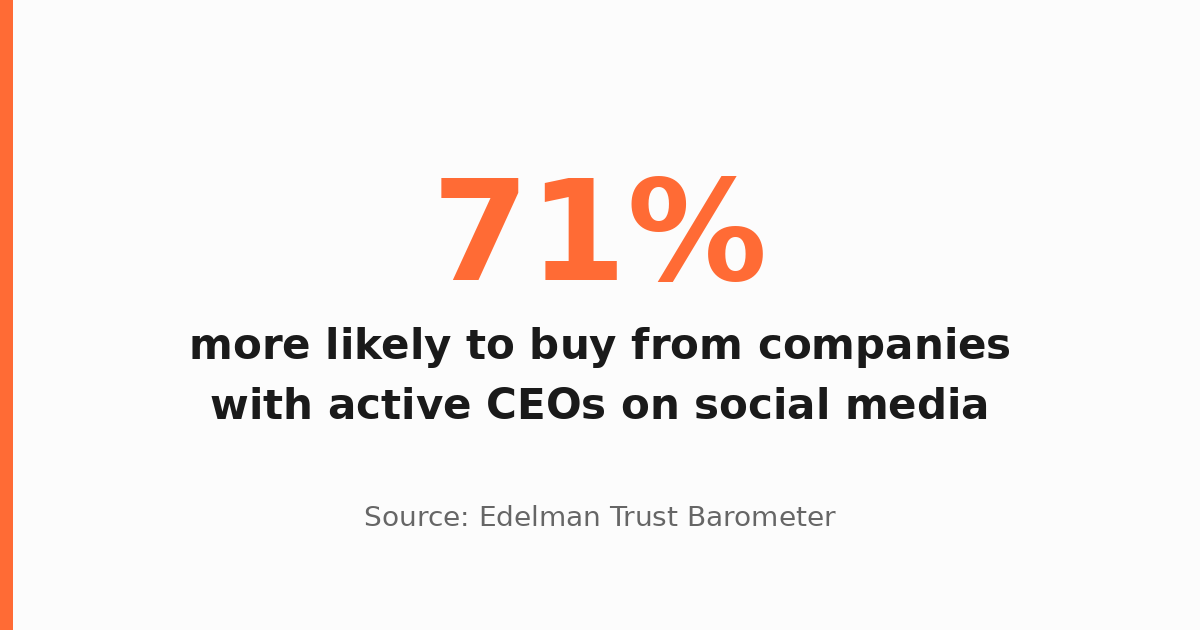
According to Edelman, 71% of consumers are more likely to buy from a company if its CEO is active on social media. In B2B, where decisions are relational, that number is even higher.
Your company page explains what you do. Your personal brand explains why you do it and who you are. That's what builds trust.
Consistency Beats Perfection
In politics: "The candidate who showed up authentically and responded honestly and appropriately to their constituents concerns wins."
It didn't matter if your speech was polished. What mattered was showing up consistently. People needed to see you to trust you.
Same on LinkedIn.
Posting once a month with a perfect post doesn't work. Posting 2-3x per week with something real — that works.
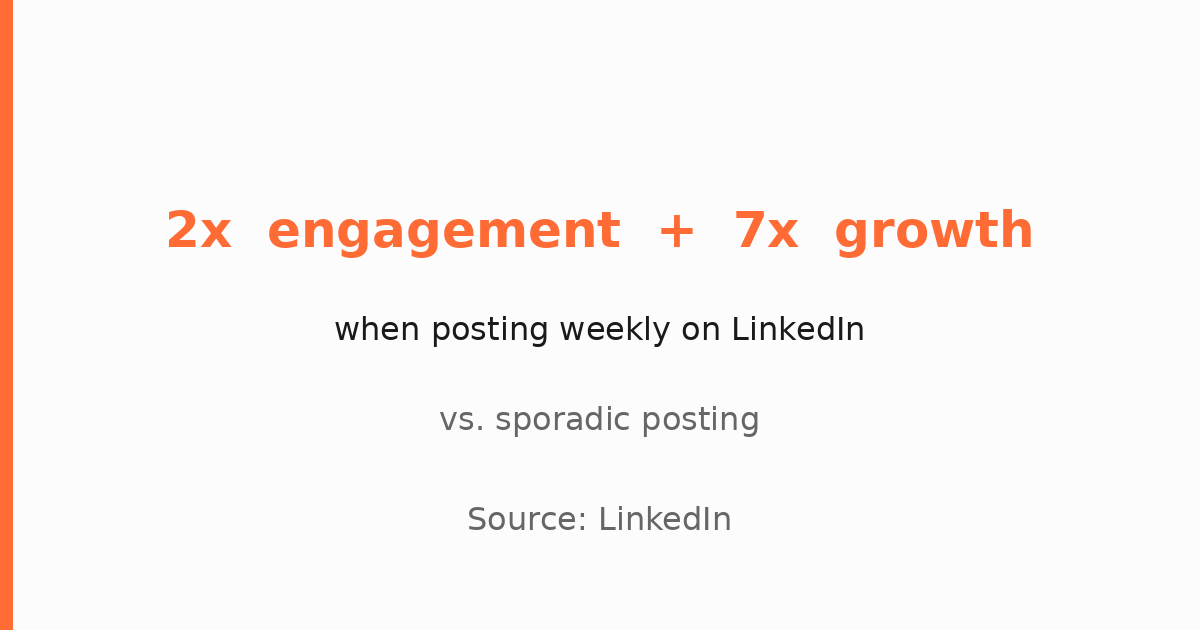
LinkedIn data shows professionals who post weekly see 2x engagement rates and 7x faster follower growth than sporadic posters.
I see founders agonize over every word for days, then never publish. Meanwhile, competitors post 3x per week and build relationships.
Perfect is the enemy of posted. Posted is what wins.
Authenticity Is Strategy, Not a Buzzword
Every politician wanted to seem "authentic." Most struggled at it. They thought authenticity meant oversharing or posting kids' photos to seem "relatable."
That's performance.
Real authenticity is alignment. What you say matches what you do. Your public brand matches who you actually are.
When a candidate's brand didn't align with their behavior, voters could smell it. You can't fake authenticity—people are good at detecting bullshit.
Founders face the same scrutiny. Your posts can say "transparency," but if your actions don't match, people know.
You don't need to be perfect. You need to be honest. Share what you're actually thinking. Admit when you don't know something. Talk about real challenges, not the sanitized version.
Controversy Is Fine. Confusion Is Fatal.
In politics, we'd rather have a candidate take a clear position that 40% of people hated than a vague position that left everyone confused.
Clarity is memorable. Confusion is forgettable.
If people disagree with you, they remember you. But if they think "Wait, what was the point?"—you're invisible.
I see founders post vague platitudes constantly. "Excited for the journey." "Grateful for the team."
Nobody remembers that.
Posts that work? "Here's why most SaaS pricing is broken." "We made a mistake, and here's what we learned."
You don't need to be controversial for the sake of it. But you do need an opinion. Opinions are memorable.
Repetition Is How Messages Stick
Hardest lesson for politicians: you need to say the same thing over and over before anyone hears it.
You need to say it 10 times before core supporters hear it. 50 times before the public registers it. 100 times before it's associated with you.
In politics, we called this "message discipline." For founders, same principle: pick 2-3 core messages and repeat them relentlessly.
What problem do you solve? What makes you different? What do you believe that others don't?
Say them again and again, in different formats, from different angles — but keep saying them. Your audience is busy. They scroll. They forget. Repetition is how you break through.
You Can't Outsource Your Voice
This hurt political campaigns: candidates losing their own voice in favour of outdated and overly safe messaging templates.
Same with founders and ghostwriters.
You can hire someone to help structure ideas. Pull stories out of you. Edit drafts. But the moment you hand over your voice entirely — the moment someone else is writing for you instead of with you — your audience feels it.
Your voice is the only thing you have that's unique. It's what can't be commoditized. It's what makes people choose you over a competitor with identical features.
You can delegate a lot in your business. Your voice isn't one of them.
So What Do You Actually Do?
If you've been putting off building your personal brand because you think it's narcissistic or something you'll "get to later" — that's a mistake.
Your personal brand isn't about vanity. It's about leverage.
It's about showing up consistently enough that when someone has the problem you solve, they think of you. It's about building trust at scale. It's about creating demand without relying on paid ads.
The playbook:
- Show up consistently (2-3x per week)
- Be honest about what you actually think
- Pick 2-3 core messages and repeat them
- Capture the conversations you're already having
- Don't outsource your voice
That's what worked in politics at the highest levels. That's what works for founders now.
The only question is: are you going to do it?