The difference between a thought leader and a founder who actually has thoughts
Thought leadership has become a content category, not a quality. Here's the difference and why it matters more than ever in a feed full of AI-generated sameness.
"Thought leader" used to mean something.
It meant you had a perspective that changed how people in your industry thought about a problem. That you'd earned a point of view through real experience and were willing to defend it. That reading your content made someone sharper.
Now it's a content category. A posting cadence. A LinkedIn bio descriptor that tells you almost nothing about whether the person behind it has anything worth saying.
The category got crowded. Then AI arrived and flooded it entirely. And somewhere in that process, thought leadership stopped being about the quality of the thinking and started being about the volume of the output.
Your ICP noticed. They're less impressed than they've ever been.
The Feed Is Full. The Thinking Is Empty.
Here's what the data actually shows.
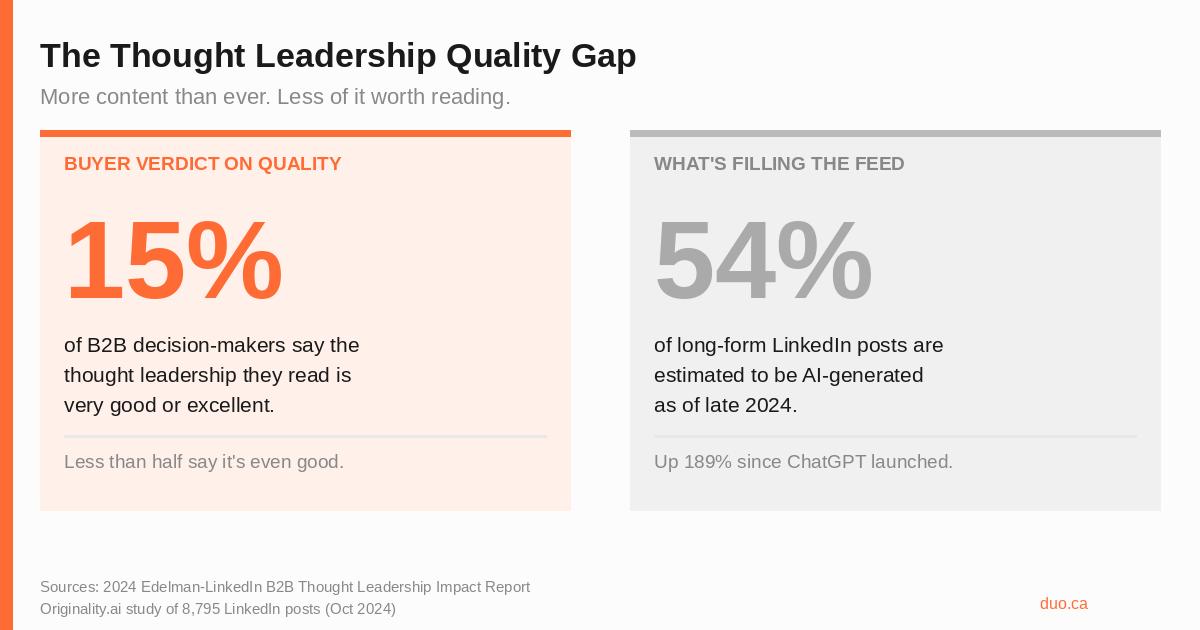
According to the 2024 Edelman-LinkedIn B2B Thought Leadership Impact Report, only 15% of B2B decision-makers describe the thought leadership they consume as very good or excellent. Less than half say it's even good. They're reading more content than ever and finding almost none of it genuinely useful.
At the same time, a study by Originality.ai analyzing nearly 9,000 LinkedIn posts found that 54% of long-form posts on the platform are now likely AI-generated. More than half the feed is machine-produced content, much of it trained on the same sources, hitting the same beats, landing in the same tone.
The result is a feed that looks busy and says very little. Polished five-point frameworks. Insight-flavored summaries of things everyone already knows. Opinions that are technically opinions but don't actually take a position on anything that matters.
Your ICP scrolls through it. They're not learning anything. They're waiting for someone to say something real.
Performing Expertise vs. Having It
The distinction worth making isn't between AI content and human content. It's between performing expertise and actually having it.
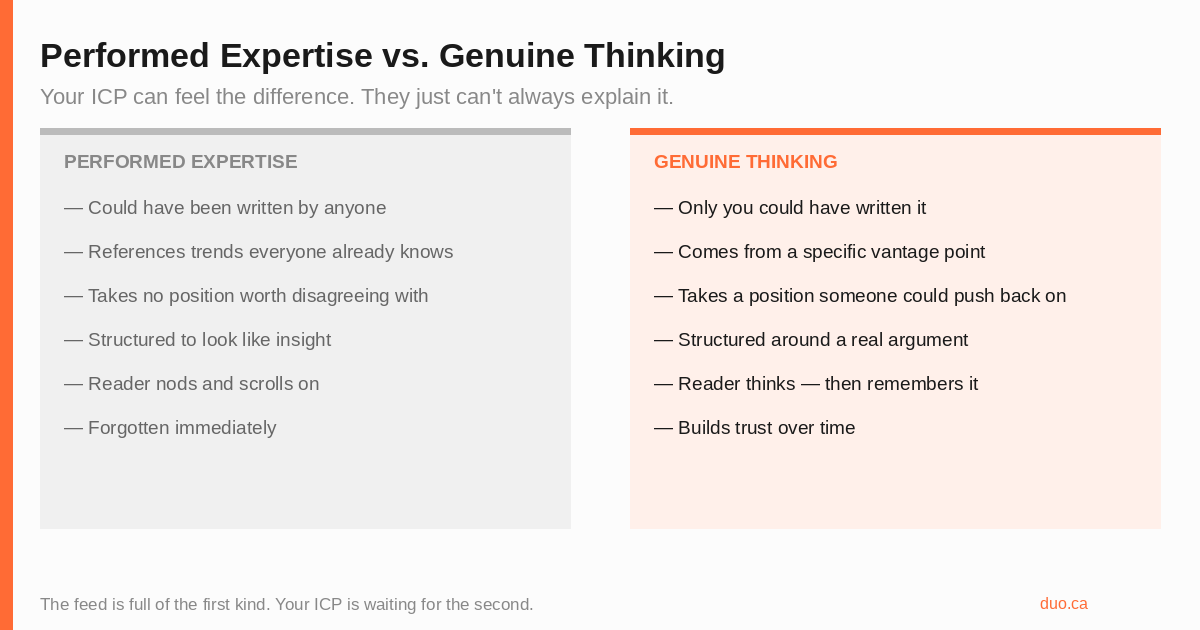
Performed expertise looks like thought leadership. It has the right structure. It uses the right vocabulary. It references the right trends. But it doesn't come from anywhere specific. It could have been written by anyone with a passing familiarity with the topic. And your ICP, who lives in this space every day, can feel the difference immediately even if they can't always articulate it.
Real expertise looks different. It comes from a specific vantage point. It says something that only someone with your exact experience, your exact customers, your exact mistakes could say. It sometimes takes a position that a portion of your audience will disagree with. It makes the reader think rather than just nod.
The founders building the most trusted brands on LinkedIn right now aren't the ones posting the most. They're the ones who have something specific to say and say it without softening it into nothing.
That requires a different approach to content entirely. Not what trend should I weigh in on. But what do I actually think about this, and am I willing to say it clearly enough that someone could push back on it.
The AI Slop Problem Is Also an Opportunity
The flood of AI-generated content has created an obvious problem. It's also created a significant opening.
When more than half the feed is machine-produced, anything that reads like a real person with a real perspective becomes immediately distinct. The bar for standing out isn't getting higher. In a feed full of content that sounds the same, it's actually getting lower for the founders willing to show up with genuine substance.
The founders who win this environment aren't the ones with the best prompts or the most sophisticated AI tools. They're the ones who use their own thinking as the raw material and treat everything else as editing assistance. The ideas come from them. The stories come from them. The position comes from them.
That's not a rejection of AI. It's a recognition that your perspective is the only thing in your content stack that can't be replicated. Everything else is infrastructure.
What Genuine Thought Leadership Actually Requires
It requires having opinions you'd be willing to defend in a room with your best customers.
Not "here are five trends to watch in your industry." Not a summary of a report everyone in your space has already read. Not a post about resilience or gratitude or lessons from a recent flight delay.
Opinions that come from your specific experience. Positions that reflect how you actually think about the problem your company solves. Disagreements with conventional wisdom in your category that you've earned the right to make.
The founders who do this consistently build something that compounds. They become the person their ICP thinks of when a problem they care about comes up. Not because they posted more, but because they said something that stuck.
That's the difference between a thought leader and a founder who actually has thoughts. One is a content strategy. The other is a trust asset.
The feed will keep filling up with performed expertise. Your ICP will keep scrolling past it, waiting for something real.
The only question is whether that something comes from you.
If you're a B2B founder who wants to build a presence built on genuine substance rather than content volume, that's exactly what DUO is built around. Book a discovery call with Justin.